Heavy Rubble, Small Box: Why Skip Size Is a Weight Question First
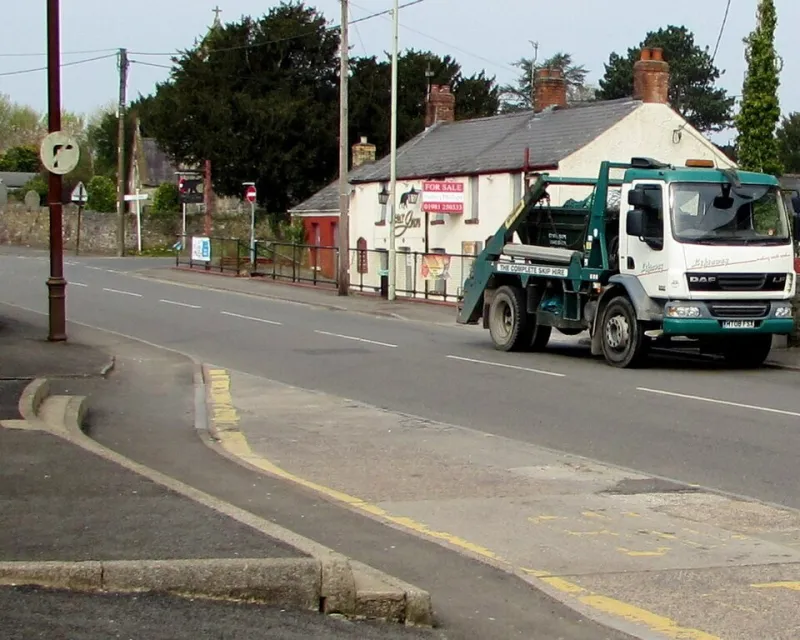
Photo: Jaggery , CC BY-SA 2.0, via Wikimedia Commons
A skip looks like a simple metal box. In practice, it has two limits: how much space it offers and how much weight it can legally carry. Most hire conversations focus on the first number — cubic yards — because that is how skips are sold. For rubble, soil, concrete and plasterboard, the second number is the one that decides whether your clearance runs smoothly or ends with an overweight charge.
Volume is the advert; weight is the bill
A cubic yard measures space. A tonne measures mass. They are not interchangeable, and the gap between them gets wider as the material gets denser. Light bulky waste, such as cardboard, loft insulation or old furniture, will fill a skip long before it troubles the weighbridge. Heavy waste is the opposite. Soil, sand, gravel, broken concrete, tiles and mortar can push a skip to its weight limit while there is still visible space around the sides.
That is why a skip that looks half full can still be a problem. The fill line is a useful guide, but it is not a guarantee. The only reliable limit is the maximum weight stated by the hire company — and that should be on your quote or confirmation, not just mentioned on the phone.
Why heavy loads behave differently
Think about a bulk bag of soil. It is roughly the size of a small sofa, yet it can weigh the best part of a tonne depending on moisture. A few of those in a larger skip and you are close to the limit before you have added the old patio, the broken path or the remains of a garden wall. Rubble is similar: concrete and stone are dense, and they do not compact down neatly. They sit there, heavy and awkward, taking up space and weight at the same time.
Plasterboard deserves its own warning. It is bulky, relatively heavy, and often subject to separate disposal rules. Many skip companies will not accept it mixed with general waste, and some will only take it in dedicated containers. If you are stripping a room, keep plasterboard in its own pile and ask how it should be handled before it goes in the skip.
The big-skip temptation
A larger skip feels like the efficient choice. More space, fewer collections, less mucking about. That can be true for bulky, light waste. For heavy rubble, though, a big box can encourage bad loading. You keep filling because there is room, and the weight creeps up without you noticing.
Overweight charges vary, but the pattern is familiar: a per-tonne rate for the excess, sometimes an admin fee, and sometimes a refused collection until the load is reduced. That is a miserable way to end a job. A smaller skip acts as a physical brake. It fills sooner, so you check it sooner, and you are less likely to sail past the limit while telling yourself there is still space.
When a small skip is the smarter buy
Small does not mean insufficient. It means matched to the material. A single bathroom strip-out — tiles, mortar, an old basin, a bit of rubble — is often a better fit for a smaller skip than a large one, provided the weight allowance covers it. The same goes for a modest patio removal or a path replacement where the waste is dense but the volume is not enormous.
For bigger heavy jobs, staged collections can work better than one enormous container. Two smaller skips collected at sensible intervals can keep the weight under control and the driveway clearer. It is not always the cheapest headline price, but it is often the cheaper finished job once overweight charges and delays are factored in.
How to estimate without turning it into homework
You do not need a spreadsheet. Start with the material, not the box. If most of the load is soil, rubble, concrete, tiles or plasterboard, assume weight will be the limiting factor. Use bulk bags or known quantities as a rough guide. A bulk bag of soil or aggregate is heavy; a few of them add up quickly. If you are breaking up a concrete path, estimate the area and thickness rather than guessing by eye.
Then ask the hire company three things: the maximum weight for the skip size, what happens if you go over, and whether heavy waste is accepted at all. Get the answers in writing. A good quote should make the weight limit as clear as the dimensions.
A short script for the hire desk
Ask: What is the weight limit in tonnes for this skip? Is there a lower limit for soil, rubble or plasterboard? What is the overweight charge per tonne, and is there an admin fee? Will you collect if the skip is loaded level but over weight? Do you need the heavy waste separated?
Those questions take two minutes and can save a lot of arguing later. They also flush out the difference between a cheap headline price and a realistic one.
The bottom line
Cubic yards are useful for comparing space, but they are a poor guide to heavy waste. Rubble, soil and plasterboard can max out a skip long before it looks full. If your clearance is dense rather than bulky, start with the weight limit and work backwards. At Tow A Skip, we would rather sell you the right skip than the biggest one. A smaller skip that stays within its allowance will usually beat a larger one that looks impressive, sits half empty and ends up costing more at the weighbridge.