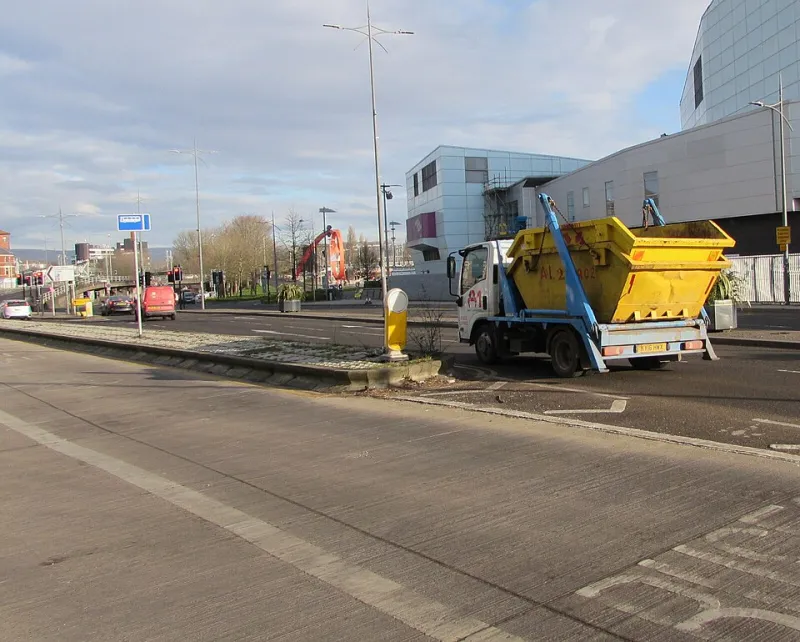
Lorries First, Load Later: Siting a Skip So the Bin Round Still Runs

Photo: skip hire container on residential street UK with wheelie bins and pavement, via magicandmonsters.com
A skip is a temporary guest on the street. The bin lorry is a weekly fixture. When the two arrive on the same stretch of tarmac, the skip has to know its place. Get the siting wrong and you don’t just annoy the neighbours — you can block the refuse round, squeeze out emergency access and turn a straightforward clearance into a council conversation.
The good news is that this is mostly a measuring-and-communication job. No heroic engineering required. Just a bit of thought before the lorry drops the container.
Start with the route, not the rubbish
Before you decide where the skip goes, walk the street the way the bin lorry would. Where does it normally stop? Which side of the road does the crew work from? Is there a tight corner, a pinch point near parked cars, or a turning head they need to swing into?
If you’re not sure, ask the council when your collection is due and whether the crew has any known access issues on your road. You don’t need a formal meeting. A quick phone call or a look at the council’s waste pages will usually tell you enough. For terraced streets, cul-de-sacs and lanes with parking on both sides, this bit matters more than the skip size itself.
The clearances worth checking
Permit conditions vary across the UK, so treat your council’s paperwork as the final word. That said, there are some practical clearances that come up again and again:
- Footway width. Leave enough pavement for a pushchair, a wheelchair or someone with a shopping trolley. Many permits expect a clear footway; if the skip would force pedestrians into the road, rethink the spot.
- Emergency access. Fire appliances and ambulances need a usable width. Local guidance often looks for something in the region of 3.1 metres clear, but check your council’s specific requirements rather than guessing.
- Hydrants. Never cover a hydrant or its marker. Keep the area around it visible and reachable. A skip sitting on top of one is a problem nobody wants to discover at speed.
- Junctions and sightlines. Keep back from corners, pedestrian crossings and anywhere a driver’s view is already tight. A skip shouldn’t become a blind spot.
- Bin presentation space. Don’t park the skip on the exact patch where bins are normally put out. Leave a gap so the crew can wheel bins to the lorry without a obstacle course.
The bin lorry isn’t a courier
Refuse crews work to a schedule. They are not going to shunt a skip, squeeze past a poorly placed container or drag bins through a gap that looks like a puzzle. If the bins can’t be presented properly, you risk a missed collection — and that’s before the neighbours start asking why their rubbish is still sitting there.
If your skip is going to be in place over bin day, make sure the bins can still be wheeled to the normal collection point. If they can’t, ask the council whether an alternative presentation point is allowed. Don’t just leave them stranded at the skip and hope for the best.
Talk before the drop
A five-minute conversation with the neighbours can save a week of friction. Tell them when the skip is arriving, how long it’s staying and where it will sit. Ask whether anyone has a delivery, a carer visit, a driveway they need to use or a mobility issue that makes pavement access important.
Then talk to the council. If you already have a permit, read the conditions properly. They may specify cones, lights, dimensions or the days the skip can be on the road. If your first-choice spot doesn’t work, ask whether the permit can be varied before the skip lands. It’s much easier to adjust paperwork than to argue with a enforcement officer or a refuse crew at 7am.
When there’s barely room
Some streets simply don’t have a generous kerbside. If the permit or driveway layout leaves you tight, try these adjustments:
- Shift along the kerb. A metre or two can be the difference between blocking the bin presentation spot and leaving it clear.
- Use the driveway. If the skip fits wholly within your boundary and doesn’t overhang the footway, it may be the least disruptive option. Protect the surface underneath — a loaded skip is heavy and driveways aren’t all built for point loads.
- Downsize the container. A smaller skip or a skip bag can reduce the footprint enough to keep the street working. It may mean more trips or a different loading plan, but it keeps access clear.
- Stagger the delivery. If bin day is looming, ask whether the skip can arrive after the round has been. Timing is often more flexible than people assume.
The collection-day drill
The night before bin day, check that the skip hasn’t been moved, that any cones or lights required by the permit are still in place, and that the bins can be reached. On the morning, if the crew can’t get through, phone the council and the skip company rather than waiting for the missed-collection notice. A quick call can sometimes get the round re-routed or the skip shifted before the day is out.
Emergency access is not optional
A blocked street is inconvenient on a normal day. When an ambulance or fire appliance needs to get through, it’s serious. Keep turning circles, hydrants, alleyways and pedestrian routes clear. Don’t let the skip force people into the road or leave a crew with no way to reach a property. That’s the line you don’t cross.
A skip should make your clearance easier, not make the street harder to use. Site it with the bin lorry, the emergency services and the neighbours in mind, and the whole job runs a lot more smoothly.