Six Yards, Less Fuss: Why Most Home Jobs Don’t Need the Biggest Skip

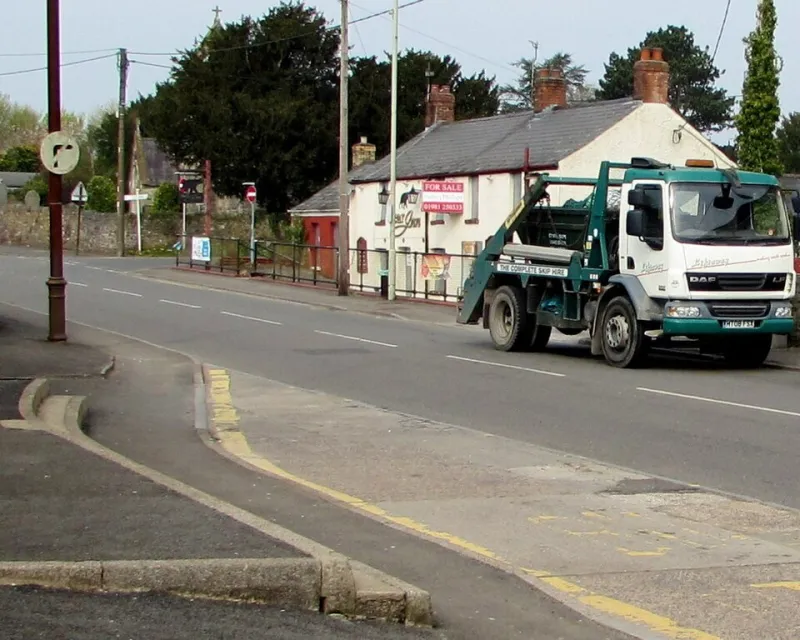
Photo: RichTea, CC BY-SA 2.0, via Wikimedia Commons
Ordering a skip can bring out the optimist in anyone. The thinking goes: the job might be bigger than expected, so get the biggest skip available. Then it arrives, takes up half the street, needs a permit, and sits half empty while you trip over it. In most UK home renovations, the middle skip is the smarter buy.
I am not against 8-yard skips. They have their place. But if you are clearing a kitchen, refitting a bathroom or tidying a garden, a 6-yard skip is often the one that gets the job done without the drama.
Why the biggest skip is often the worst value
An 8-yard skip is long. That is its selling point and its problem. On a driveway it can block access or hang over the pavement. On the road it needs a permit and enough space to be placed safely. It also has a weight limit, and a big skip filled with rubble can be overweight long before it looks full.
A 4-yard skip has the opposite problem. It is easy to place, but a full kitchen rip-out will fill it faster than you expect. Then you are paying for a second collection or a second skip, which wipes out any saving.
The 6-yard skip sits in the middle. It holds enough for most domestic projects, fits on more driveways, and is less likely to trigger awkward permit conversations.
The sizes without the sales pitch
A 4-yard skip is the small one. Think bathroom suite, a few tiles, a tidy garden clear or a garage sort-out. It is good when access is tight or the waste is heavy and you want to keep an eye on the fill level.
A 6-yard skip is the workhorse. It suits kitchen rip-outs, bathroom refits, bulky furniture, small garden clears and general renovation waste. It is usually the best balance of volume and footprint.
An 8-yard skip is the big one. It makes sense for a whole-house clearance, an extension, a loft and garage clear at the same time, or bulky lightweight waste that takes up space but not much weight. It needs more room and often a permit if it is going on the road.
Real jobs, real skips
For a kitchen rip-out, a 6-yard is usually right. Old units, worktops, tiles, packaging and a few odds and ends add up quickly. A 4-yard can work if you are only replacing doors and worktops, but for a full strip-out it will feel tight.
For a bathroom refit, it depends on what is coming out. A suite, tiles and a bit of flooring might fit in a 4-yard. If you are stripping the room back to the studs, a 6-yard gives you breathing room.
For a small garden clear, a 6-yard is a sensible default. Green waste is bulky but not usually heavy. If you are digging out soil, turf or rubble, do not rely on volume alone. Heavy waste needs a separate plan and often a lower fill level.
For bulky furniture, a 6-yard is often better than an 8-yard. Sofas, wardrobes and bed frames take up space, but they can be broken down. A 6-yard keeps the job contained without dominating the driveway.
Access and permits: where six yards earns its keep
Measure before you order. A 6-yard skip is often around 2.9 metres long, while an 8-yard can be closer to 3.7 metres. That extra length matters on a narrow drive, a shared access road or a street with parked cars.
If the skip goes on a public road, check the council's permit rules. The size can affect where it can sit and how long it can stay. A smaller skip is not automatically permit-free, but it is often easier to place legally.
Weight is the hidden limit
Skip prices are not just about volume. They are about weight and disposal. Rubble, soil, concrete and tiles are heavy. A 6-yard skip filled sensibly with heavy waste can be a better bet than an 8-yard that is loaded past its limit because it looked empty at the top.
Ask the skip company about weight limits before you order, especially for heavy waste. If you have a lot of soil or rubble, it may be cheaper to order a smaller skip and fill it properly than to pay overweight charges on a big one.
When the 8-yard still wins
If you are clearing a whole house, stripping an extension or dealing with bulky lightweight waste, the 8-yard can be the right call. The same goes if you have a long driveway, easy access and a permit sorted. The point is not that 6 yards is always best. It is that it is the better default for most home jobs.
A quick decision checklist
- Measure the driveway and the gate width.
- Check whether the skip will sit on private land or the public road.
- List the waste: heavy, bulky, green, hazardous or mixed.
- Ask about weight limits, not just skip size.
- Confirm whether a permit is needed and who arranges it.
- Think about collection timing: a skip that sits for weeks costs more and annoys neighbours.
- If you are unsure, send photos to the skip company and ask for a realistic size.
The verdict
Most home renovations do not need the biggest skip. They need the right skip. A 6-yard is usually the sweet spot: big enough for a proper clear-out, small enough to fit, and easier to fill without risking an overweight charge. Order for the job in front of you, not for the panic in your head.