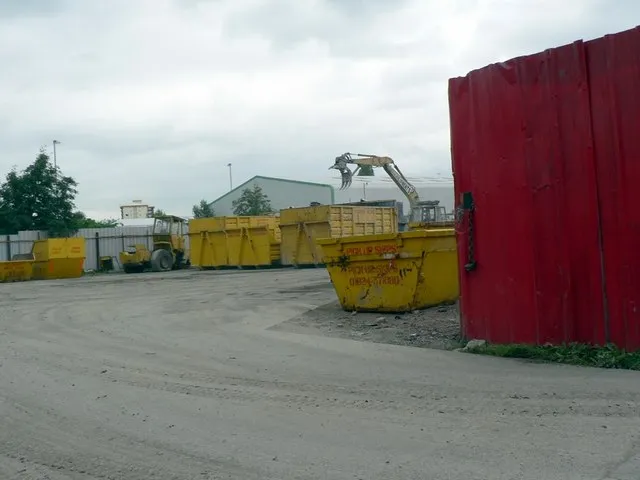
Proof in the Paperwork: What Your Skip Hire Should Hand You
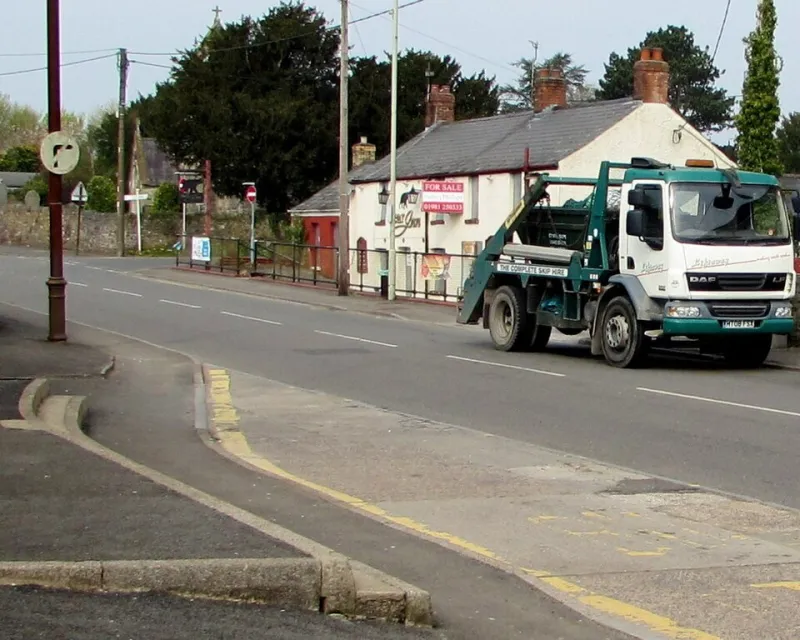
Photo: Jaggery , CC BY-SA 2.0, via Wikimedia Commons
A skip on the drive feels like the hard work is over. The real test can arrive weeks later: a council officer asks where the waste went, a client wants evidence for their file, or a buyer's solicitor raises an awkward question about fly-tipped rubble. That is when the paper trail matters.
The duty of care for waste does not stop when the lorry pulls away. Householders and tradespeople both have a role in making sure waste goes to a registered carrier and a permitted site. The good news is that the evidence is not complicated. It is a small pack of documents that a reputable skip company should be able to give you without a fuss.
What the law expects in practice
In the UK, anyone who produces, carries, keeps, treats or disposes of waste has a duty of care. For a typical skip hire, that means three things: the company collecting the skip should be a registered waste carrier, the transfer of waste should be covered by a waste transfer note, and any hazardous waste should have its own consignment note. If the skip sits on a public road, there should also be a skip permit from the local council.
England, Wales, Scotland and Northern Ireland have their own regulators and slightly different wording, but the principle is the same: waste must be described, transferred to someone authorised to take it, and recorded. A skip company that cannot explain that chain is not a bargain.
The waste transfer note is the main event
The waste transfer note, often shortened to WTN, is the record of waste passing from one party to another. For a domestic skip, you might not be handed one automatically, but you are entitled to ask. A proper WTN should include the date of transfer, a description of the waste, the quantity or container type, the carrier's name and registration number, the receiving site and its permit details, and signatures from both sides. Electronic transfer notes are fine, as long as they are legible and complete.
Check that the description is specific. 'Household rubbish' is vague. 'Mixed household waste from kitchen renovation, including timber, packaging and old units' is more useful. If the company uses European Waste Catalogue codes, so much the better. The key is that the note matches the job and the skip you actually hired.
Keep the WTN for at least two years. That is the usual legal baseline for non-hazardous waste. If you are a tradesperson working for a client, keep it for as long as your contract or their file requirements demand. Three years is a sensible habit if you want to be safe.
Hazardous waste needs a consignment note
Some waste should never be hidden in a mixed skip. Asbestos, old paint, chemicals, fluorescent tubes, some oils and contaminated soil are examples. These need a hazardous waste consignment note, a registered carrier, and a site permitted to take that specific waste. The consignment note tracks the waste from production to disposal and should be kept for three years.
If a skip company says 'we can take anything' with a shrug, treat that as a warning. Hazardous waste is exactly where cheap operators cut corners, and the consequences land on the person who produced the waste as well as the carrier.
Permits: keep the reference, not just a promise
A skip placed on a public highway normally needs a permit from the council. The skip company often arranges this, but you should still ask for the permit reference, the dates it covers, and the location. Check the conditions: reflective markings, lights, and how long the skip can stay. A permit for three days does not cover a skip that sits there for a fortnight.
If the skip is on private land, such as your driveway, a permit is usually not needed. The paperwork for the waste itself still is. Do not let the absence of a permit turn into the absence of a WTN.
Check the waste carrier registration
Ask for the company's waste carrier registration number and check it on the public register. In England use the Environment Agency register, in Wales Natural Resources Wales, in Scotland SEPA, and in Northern Ireland the NIEA. Check that the name on the register matches the name on the invoice and, ideally, the name on the lorry. A screenshot of the check is quick and useful.
Look for upper-tier registration for waste carrying. A company might say it is 'licensed' or 'registered' without giving a number. That is not enough. Registration is free to check and takes minutes.
What to keep, and for how long
Keep a simple digital folder for each job. It should contain the waste transfer note, the invoice or receipt, the permit reference or copy if a permit was needed, any hazardous waste consignment note, and a note of your carrier registration check. A photo of the empty skip before collection and the loaded skip can also help if there is ever a dispute about what was removed.
For non-hazardous waste, two years is the minimum. For hazardous waste, three years. For business clients, ask what they need for their own compliance file. It is easier to keep too much than to explain a gap later.
Red flags when hiring
Be cautious if the company cannot provide a waste transfer note, will not give a carrier registration number, asks for cash with no address or invoice, claims it can take 'anything', or never mentions permits for a road placement. A very cheap quote can be a sign that waste is being fly-tipped. If waste is traced back to your address, 'the skip company took it away' is not a defence.
A simple document checklist
- Waste transfer note with date, waste description, carrier details and receiving site.
- Invoice or receipt showing the company name and skip size.
- Skip permit reference or copy if the skip is on a public road.
- Hazardous waste consignment note if applicable.
- Record of the waste carrier registration check.
- Photos of the skip before and after loading, if you want extra evidence.
The bottom line
Paperwork is not glamorous, but it is cheap compared with a fine, a failed client audit, or a council investigation. A reputable skip hire should be happy to hand over the paper trail. If they are not, find another company.